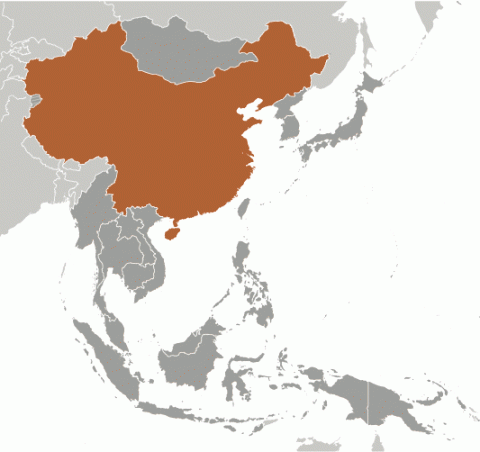
There are reports that children are forced to pick cotton in China. Reports from an NGO and the U.S. Government indicate that children in the Xinjiang Uighur Autonomous Region and in Gansu province are mobilized through schools and required by provincial regulations to work during the autumn harvest. According to the most recently available estimates, between 40,000 and 1 million students are mobilized annually for the harvest, beginning as early as the third grade. Most children are paid little if at all, after deductions for meals, transportation, and payments to the school. These students are required to pick daily quotas of cotton or pay fines, and performance in the cotton harvest is assessed for the students' promotion to higher grade levels.
There are reports that children, mostly ages 13-16, are forced to produce toys in China. The most recently available data from an NGO study indicates that hundreds of children are exploited in this manner. Reports indicate children from Sichuan, Guangxi, and other provinces are sent to work primarily in Guangdong to make toys. Some of these children are trafficked after being recruited through deceptive promises, and others are forced to work by teachers through work-study programs. Children of the Yi ethnic minority in Liangshan prefecture of Sichuan are particularly vulnerable. The children report being forced to work long hours under threat of financial penalty and being fined for any mistakes in their work. Some children state that teachers withhold wages for “tuition” and management fees. In addition, employers withhold wages for months to prevent children from leaving.
There are reports that children, ages 8-17, are forced to produce bricks in China, with concentrations in the Shanxi and Henan provinces. Victims are from provinces across China; some children are abducted or trafficked through coercion and sold to work in brick kilns. Information from media sources and a research study indicate that the children are forced to work without pay under threat of physical violence, held against their will, watched by guards, and denied sufficient food.
There are reports that children ages 13-15 are forced to produce electronics in China. Based on the most recently available data from media sources, government raids, and NGOs, hundreds of cases of forced child labor have been reported in factories in Guangdong province, but the children are often from Henan, Shanxi, or Sichuan provinces. In some cases, children are forced to work in electronics factories through arrangements between the factories and the schools that the children attend in order to cover alleged tuition debts. The forced labor programs are described as student apprenticeships; however, the children report that they were forced to remain on the job and not allowed to return home. Half of the students' wages are sent directly to the schools, and the children receive little compensation after deductions are made for food and accommodations. In other cases, children are abducted or deceived by recruiters, sent to Guangdong, and sold to employers. Some children are held captive, forced to work long hours for little pay.
ILAB has reason to believe that cotton thread/yarn, cotton textiles, and cotton garments produced in China are made with an input produced with forced labor—specifically cotton harvested in China. Cotton from China is on ILAB’s List of Goods Produced by Child Labor or Forced Labor for forced labor, child labor, and forced child labor. About 85% of China’s cotton and 20% of the world’s cotton is produced in the XUAR, where research has shown it is harvested and processed under conditions of forced labor. In China, this cotton is spun into cotton thread/yarn and textiles and may be mixed with cotton from other sources. Manufacturers in China source large volumes of cotton fabrics containing Xinjiang origin cotton to produce finished garments. It is likely that products of Xinjiang-origin cotton produced further downstream, such as garments, textiles, and other cotton-based products, may be produced with an input produced with forced labor.
ILAB has reason to believe that cotton thread/ yarn, cotton textiles, and cotton garments produced in China are made with an input produced with forced labor—specifically cotton harvested in China. Cotton from China is on ILAB’s List of Goods Produced by Child Labor or Forced Labor for forced labor, child labor, and forced child labor. About 85% of China’s cotton and 20% of the world’s cotton is produced in the XUAR, where research has shown it is harvested and processed under conditions of forced labor. In China, this cotton is spun into cotton thread/yarn and textiles and may be mixed with cotton from other sources. Manufacturers in China source large volumes of cotton fabrics containing Xinjiang origin cotton to produce finished garments. It is likely that products of Xinjiang-origin cotton produced further downstream, such as garments, textiles, and other cotton-based products, may be produced with an input produced with forced labor.
There are reports that adults are forced to produce textiles in China. Researchers estimate that at least 100,000 Uyghurs, ethnic Kazakhs, and other Muslim minorities are being subjected to forced labor in China following detention in re-education camps, in addition to rural poor workers who may also experience coercion without detention. Workers can be placed at factories within the Xinjiang Uyghur Autonomous Region, where the camps are located, or be transferred out of Xinjiang to factories in eastern China. According to think tank and media reports, the textile industry works with the Government of China to make use of ethnic minority groups for exploitative labor. Researchers note that Xinjiang is undergoing an expansion of the textile industry, and it is possible that hundreds of thousands of workers are being subjected to forced labor as part of this effort. Victim testimonies, news media, and think tanks report that factories, including for textiles, frequently engage in coercive recruitment; limit workers’ freedom of movement and communication; and subject workers to constant surveillance, retribution for religious beliefs, exclusion from community and social life, and threaten family members. Further, some workers have been subject to military-style management, government indoctrination, and are paid below the minimum wage.
There are reports that adults are forced to work in the production of fish on China’s distant-water fishing fleet. China’s fleet is the largest in the world, with an estimated 3,000 fishing vessels, and contains a wide variety of vessels, from longliners to purse seiners, operating on the high seas and in foreign countries’ exclusive economic zones in every region of the world. The majority of the crew on board are migrant workers from Indonesia and the Philippines, who are particularly vulnerable to forced labor. It is estimated that there are tens of thousands of workers who are sometimes recruited by agencies that deceive workers with false information regarding their wages and the terms of the contracts, and require the workers to pay recruitment fees and sign debt contracts. According to various sources, numerous incidents of forced labor have been reported on Chinese fishing vessels. While on board the vessels, workers’ identity documents are often confiscated, the crew spends months at sea without stopping at a port of call, and they are forced to work 18 to 22 hours a day with little rest. Workers face hunger and dehydration, live in degrading and unhygienic conditions, are subjected to physical violence and verbal abuse, are prevented from leaving the vessel or ending their contracts, and are frequently not paid their promised wages.
There are reports of glove factories forcibly training and employing 1,500 to 2,000 ethnic minority adult workers with the government’s support. Victim testimonies, news media, and think tanks report that factories, including for gloves, frequently engage in coercive recruitment; limit workers’ freedom of movement and communication; and subject workers to constant surveillance, retribution for religious beliefs, exclusion from community and social life, and isolation. Further, reports indicate little pay, mandatory Mandarin lessons, ideological indoctrination, and poor living conditions. In some instances, workers have been reported to be subject to torture. More broadly, according to varied estimates, at least 100,000 to hundreds of thousands of Uyghurs, ethnic Kazakhs, and other Muslim minorities are being subjected to forced labor in China following detention in re-education camps. In addition to this, poor workers in rural areas may also experience coercion without detention. Workers are either placed at factories within the Xinjiang Uyghur Autonomous Region, where the camps are located, or transferred out of Xinjiang to factories in eastern China.
There are reports that thousands of adult ethnic minority workers are forcibly employed in factories producing hair products such as wigs. China produces more than 80 percent of the global market’s products made from hair and is the world’s largest exporter of these products. Victim testimonies, news media, and think tanks report that factories, including for hair products, frequently engage in coercive recruitment; limit workers’ freedom of movement and communication; and subject workers to constant surveillance, retribution for religious beliefs, exclusion from community and social life, and isolation. Further, workers in these factories can be subject to regular government propaganda, extremely long hours, and little to no pay. More broadly, according to varied estimates, at least 100,000 to hundreds of thousands of Uyghurs, ethnic Kazakhs, and other Muslim minorities are being subjected to forced labor in China following detention in re-education camps. In addition to this, poor workers in rural areas may also experience coercion without detention. Workers can be placed at factories within the Xinjiang Uyghur Autonomous Region, where the camps are located, or be transferred out of Xinjiang to factories in eastern China.
ILAB has reason to believe that cotton thread/ yarn, cotton textiles, and cotton garments produced in China are made with an input produced with forced labor—specifically cotton harvested in China. Cotton from China is on ILAB’s List of Goods Produced by Child Labor or Forced Labor for forced labor, child labor, and forced child labor. About 85% of China’s cotton and 20% of the world’s cotton is produced in the XUAR, where research has shown it is harvested and processed under conditions of forced labor. In China, this cotton is spun into cotton thread/yarn and textiles and may be mixed with cotton from other sources. Manufacturers in China source large volumes of cotton fabrics containing Xinjiang origin cotton to produce finished garments. It is likely that products of Xinjiang-origin cotton produced further downstream, such as garments, textiles, and other cotton-based products, may be produced with an input produced with forced labor.
There are reports that adults are forced to produce thread/yarn in China. Researchers estimate that at least 100,000 Uyghurs, ethnic Kazakhs, and other Muslim minorities are being subjected to forced labor in China following detention in re-education camps, in addition to rural poor workers who may also experience coercion without detention. Workers can be placed at factories within the Xinjiang Uyghur Autonomous Region, where the camps are located, or be transferred out of Xinjiang to factories in eastern China. Reports indicate that more than 2,000 Uyghur and ethnic Kazakh workers have been transferred out of Xinjiang to yarn factories in the east. It also is likely that many others are subjected to forced labor at yarn factories within Xinjiang, particularly for cotton yarns. Victim testimonies, news media, and think tanks report that factories, including for thread/yarn, frequently engage in coercive recruitment; limit workers’ freedom of movement and communication; and subject workers to constant surveillance, retribution for religious beliefs, exclusion from community and social life, and threaten family members. Further, workers may undergo re-education to eradicate “extremism”.
There are reports that adults are forced to produce tomato products in China. Xinjiang is a major producer of tomato products, especially tomato paste. Victim testimonies, news media, and think tanks report that factories, including for tomato products, frequently engage in coercive recruitment; limit workers’ freedom of movement and communication; and subject workers to constant surveillance, retribution for religious beliefs, exclusion from community and social life, and isolation. More broadly, according to varied estimates, at least 100,000 to hundreds of thousands of Uyghurs, ethnic Kazakhs, and other Muslim minorities are being subjected to forced labor in China following detention in re-education camps. In addition to this, poor workers in rural areas may also experience coercion without detention.
There are reports that adults are forced to produce polysilicon for solar panels in China. According to estimates, over one hundred thousand Uyghurs, ethnic Kazakhs, and other Muslim minorities are being subjected to forced labor in China following detention in re-education camps, in addition to workers who may also experience coercion without detention. Workers, often from poor rural areas, have been placed at factories in industrial areas within the Xinjiang Uyghur Autonomous Region, where the camps are located, or have been transferred out of Xinjiang to factories in other parts of China. China is the world’s largest producer of solar-grade polysilicon, and over 50 percent of the country’s production takes place in Xinjiang. Researchers note that Xinjiang is undergoing an expansion of the energy sector, including solar energy and polysilicon, and thousands of Uyghur workers have reportedly been transferred to work sites over the last five years. The polysilicon manufacturers work with the Chinese government to make use of ethnic minority groups for exploitative labor, often receiving financial incentives. Victim testimonies, news media, and think tanks report that factories frequently engage in coercive recruitment; limit workers’ freedom of movement and communication; subject workers to constant surveillance, religious retribution, physical violence, exclusion from community and social life; and threaten family members.
ILAB has reason to believe that electrolytic copper products and lithium-ion batteries produced in China are made with an input produced with child labor, specifically copper ore produced in the DRC. Copper ore from the DRC was added to ILAB’s List of Goods Produced by Child Labor or Forced Labor in 2009 for child labor. Children mine, collect, crush, and wash copper ore in the DRC’s artisanal and small-scale mining (ASM) sector in Haut-Katanga and Lualaba. This ore is sold and traded to processing facilities in the DRC, where copper ore mined by children becomes mixed with copper ore from a variety of sources. In 2021 and 2022, China imported over 63% of DRC’s copper—some of which was produced with copper ore mined by children— for further refining and use in a variety of electrolytic (high purity) copper products including wires, bars, billets, plates, pipes, tubes, foil, and fittings. Electrolytic copper and copper alloys are used to produce lithium-ion batteries in China. This research suggests that further downstream products of copper ore, such as electric vehicles, electrical equipment, electrical wiring, brass, steel, telecommunications products, and
construction materials, may be produced with an input produced with child labor.
ILAB has reason to believe that multiple solar products produced in China are made with an input using forced labor, specifically from polysilicon produced in China. These products include photovoltaic ingots and wafers (China), solar cells (China), and solar modules (China).
Polysilicon was added to ILAB’s List of Goods Produced by Child Labor or Forced Labor in 2021 for forced labor. Forty-five percent of the world’s solar-grade polysilicon and more than half of China’s polysilicon is produced in the Xinjiang Uyghur Autonomous Region, where research has shown it is produced under conditions of forced labor. China has 98 percent of the world's manufacturing capacity for photovoltaic ingots; 97 percent for photovoltaic wafers; 81 percent for solar cells; and 77 percent for solar modules, all of which are made with polysilicon. Many of the largest global producers of photovoltaic ingots and wafers, solar cells, and solar modules directly source polysilicon from entities believed to use forced labor in its production.
In 2020, solar cells and modules imported from China accounted for over $24 billion. While the U.S. directly imported about 5 percent of its solar cells and modules from China, it is likely that additional solar cells and modules made with polysilicon produced with forced labor enter the U.S. through other countries. Many solar companies operating around the world have suppliers based in China and many are owned by Chinese companies. Over 42 percent of global imports of solar cells and modules come from China.
This research suggests that other downstream products of polysilicon, such as semiconductors, silica-based goods, and solar generators, may be produced with an input produced with forced labor.
ILAB has reason to believe that multiple solar products produced in China are made with an input using forced labor, specifically from polysilicon produced in China. These products include photovoltaic ingots and wafers (China), solar cells (China), and solar modules (China).
Polysilicon was added to ILAB’s List of Goods Produced by Child Labor or Forced Labor in 2021 for forced labor. Forty-five percent of the world’s solar-grade polysilicon and more than half of China’s polysilicon is produced in the Xinjiang Uyghur Autonomous Region, where research has shown it is produced under conditions of forced labor. China has 98 percent of the world's manufacturing capacity for photovoltaic ingots; 97 percent for photovoltaic wafers; 81 percent for solar cells; and 77 percent for solar modules, all of which are made with polysilicon. Many of the largest global producers of photovoltaic ingots and wafers, solar cells, and solar modules directly source polysilicon from entities believed to use forced labor in its production.
In 2020, solar cells and modules imported from China accounted for over $24 billion. While the U.S. directly imported about 5 percent of its solar cells and modules from China, it is likely that additional solar cells and modules made with polysilicon produced with forced labor enter the U.S. through other countries. Many solar companies operating around the world have suppliers based in China and many are owned by Chinese companies. Over 42 percent of global imports of solar cells and modules come from China.
This research suggests that other downstream products of polysilicon, such as semiconductors, silica-based goods, and solar generators, may be produced with an input produced with forced labor.
ILAB has reason to believe that multiple solar products produced in China are made with an input using forced labor, specifically from polysilicon produced in China. These products include photovoltaic ingots and wafers (China), solar cells (China), and solar modules (China).
Polysilicon was added to ILAB’s List of Goods Produced by Child Labor or Forced Labor in 2021 for forced labor. Forty-five percent of the world’s solar-grade polysilicon and more than half of China’s polysilicon is produced in the Xinjiang Uyghur Autonomous Region, where research has shown it is produced under conditions of forced labor. China has 98 percent of the world's manufacturing capacity for photovoltaic ingots; 97 percent for photovoltaic wafers; 81 percent for solar cells; and 77 percent for solar modules, all of which are made with polysilicon. Many of the largest global producers of photovoltaic ingots and wafers, solar cells, and solar modules directly source polysilicon from entities believed to use forced labor in its production.
In 2020, solar cells and modules imported from China accounted for over $24 billion. While the U.S. directly imported about 5 percent of its solar cells and modules from China, it is likely that additional solar cells and modules made with polysilicon produced with forced labor enter the U.S. through other countries. Many solar companies operating around the world have suppliers based in China and many are owned by Chinese companies. Over 42 percent of global imports of solar cells and modules come from China.
This research suggests that other downstream products of polysilicon, such as semiconductors, silica-based goods, and solar generators, may be produced with an input produced with forced labor.
ILAB has reason to believe that multiple solar products produced in China are made with an input using forced labor, specifically from polysilicon produced in China. These products include photovoltaic ingots and wafers (China), solar cells (China), and solar modules (China).
Polysilicon was added to ILAB’s List of Goods Produced by Child Labor or Forced Labor in 2021 for forced labor. Forty-five percent of the world’s solar-grade polysilicon and more than half of China’s polysilicon is produced in the Xinjiang Uyghur Autonomous Region, where research has shown it is produced under conditions of forced labor. China has 98 percent of the world's manufacturing capacity for photovoltaic ingots; 97 percent for photovoltaic wafers; 81 percent for solar cells; and 77 percent for solar modules, all of which are made with polysilicon. Many of the largest global producers of photovoltaic ingots and wafers, solar cells, and solar modules directly source polysilicon from entities believed to use forced labor in its production.
In 2020, solar cells and modules imported from China accounted for over $24 billion. While the U.S. directly imported about 5 percent of its solar cells and modules from China, it is likely that additional solar cells and modules made with polysilicon produced with forced labor enter the U.S. through other countries. Many solar companies operating around the world have suppliers based in China and many are owned by Chinese companies. Over 42 percent of global imports of solar cells and modules come from China.
This research suggests that other downstream products of polysilicon, such as semiconductors, silica-based goods, and solar generators, may be produced with an input produced with forced labor.
There are reports that adults are forced to work in the production of squid on China’s distant water fishing fleet and in squid processing in China’s Shandong Province. China’s fishing fleet is the largest in the world, including more than 500 squid jiggers, operating on the high seas and in foreign countries’ exclusive
economic zones. There are over 10,000 workers on Chinese squid jiggers, and reports indicate that a high percentage of them are in forced labor. The crew typically spends over a year, and sometimes up to 3 years, at sea without stopping at a port of call and have limited ability to communicate with the outside world. Employers take advantage of the vulnerability of the workers, many of whom are migrants from Southeast Asia. Many have been subjects of deceptive recruitment, identity documents are often confiscated, and reports indicate that workers are often prevented from leaving the vessel or ending their contracts. Workers are subjected to abusive working and living conditions, including inadequate nutrition and potable water. Some workers have died due to preventable and easily treated medical conditions, such as beriberi, a vitamin deficiency. Workers are subjected to excessive hours, physical violence, verbal abuse, threats and intimidation, and withheld wages. Some workers are subjected to debt bondage or are unable to leave due to large penalties for ending contracts early. Workers are also subjected to forced labor in squid processing facilities in mainland China as a result of state sponsored labor transfer programs. Since 2020, more than 1,000 Uyghurs and members of other persecuted ethnic minority groups from China’s Xinjiang Province have been transferred to work in squid processing facilities, primarily in Shandong Province. Furthermore, workers from North Korea have also been transferred to work at squid processing facilities. Squid processing companies and government entities frequently engage in coercive recruitment, limit workers’ freedom of movement and communication, and subjected workers to constant surveillance.
There are reports that adults in China are forced to produce polyvinyl chloride (PVC), a plastic used in a wide range of applications such as flooring, construction materials, pipes, and vinyl siding. Reports indicate that Uyghurs, ethnic Kazakhs, and other Muslim minorities from the XUAR are frequently subjected to forced labor in China as the result of state-sponsored labor transfer programs. Workers, often from poor rural areas, have been involuntarily placed in factories in industrial areas within Xinjiang or transferred out of Xinjiang to factories in other Chinese provinces. One state-owned PVC manufacturer, which runs a 3-month long ideological and vocational training “school” and participates in government surveillance of Uyghur households, has transferred more than 5,000 members of persecuted minority groups to its facilities. Labor transfers of this kind are undertaken involuntarily in the broader context of constant surveillance and genocide and under menace of penalty, including explicit and implicit threats of detention and internment and threats to family members.
There are reports that adults are forced to produce metallurgical-grade silicon in China. Research indicates that Uyghurs, ethnic Kazakhs, and other Muslim minorities are subjected to forced labor as a result of state-sponsored labor transfer programs. Metallurgical-grade silicon manufacturers in Xinjiang receive members of persecuted groups through government-sponsored labor transfer programs. Academic researchers, media, and think tanks report that companies and government entities frequently engage in coercive recruitment, limit workers’ freedom of movement and communication, and subjected workers to constant surveillance, exclusion from community and social life, physical violence, and threats to family members.
There are reports that adults are forced to produce jujubes in China. Research indicates that Uyghurs, ethnic Kazakhs, and other Muslim minorities are subjected to forced labor in jujube harvesting and processing while being held as prisoners and as a result of state-sponsored labor transfer programs. China is the world’s largest producer of jujubes, and more than 50% of production takes place in Xinjiang. Jujube producers work with the Chinese government to make use of ethnic minority groups for exploitative labor, often receiving financial incentives. Academic researchers, media, and think tanks report that companies and government entities frequently engage in coercive recruitment, limit workers’ freedom of movement and communication, and subjected workers to constant surveillance, exclusion from community and social life, physical violence, and threats to family members.
ILAB has reason to believe that electrolytic copper products and lithium-ion batteries produced in China are made with an input produced with child labor, specifically copper ore produced in the DRC. Copper ore from the DRC was added to ILAB’s List of Goods Produced by Child Labor or Forced Labor in 2009 for child labor. Children mine, collect, crush, and wash copper ore in the DRC’s artisanal and small-scale mining (ASM) sector in Haut-Katanga and Lualaba. This ore is sold and traded to processing facilities in the DRC, where copper ore mined by children becomes mixed with copper ore from a variety of sources. In 2021 and 2022, China imported over 63% of DRC’s copper—some of which was produced with copper ore mined by children— for further refining and use in a variety of electrolytic (high purity) copper products including wires, bars, billets, plates, pipes, tubes, foil, and fittings. Electrolytic copper and copper alloys are used to produce lithium-ion batteries in China. This research suggests that further downstream products of copper ore, such as electric vehicles, electrical equipment, electrical wiring, brass, steel, telecommunications products, and construction materials, may be produced with an input produced with child labor.
There are reports that adults are forced to produce caustic soda in China. Caustic soda has a wide variety of uses in industrial processes, including as an input to cleaning products and refining in mining activities. Research indicates that Uyghurs, ethnic Kazakhs, and other Muslim minorities from the Xinjiang Uyghur Autonomous Region (XUAR) are frequently subjected to forced labor as a result of state-sponsored labor transfer programs. Workers, often from poor rural areas, have been placed in factories in industrial areas within the XUAR, and have also been transferred to factories in other parts of China. China is the world’s largest producer of caustic soda, and approximately 16% of China’s production is based in Xinjiang. Caustic soda manufacturers work with the Chinese government to make use of ethnic minority groups for exploitative labor, often receiving financial incentives. Academic researchers, media, and think tanks report that companies and government entities frequently engage in coercive recruitment, limit workers’ freedom of movement and communication, and subjected workers to constant surveillance, religious retribution, exclusion from community and social life, physical violence, and threats to family members.
Aluminum from China produced with forced labor was added to ILAB’s List of Goods Produced by Child Labor or Forced Labor in 2024. There are reports that adults in China are forced to produce aluminum used in manufactured goods. Reports indicate that Uyghurs, ethnic Kazakhs, and other Muslim minorities from the XUAR are frequently subjected to forced labor in China through state-sponsored labor transfer programs. The Xinjiang Production and Construction Corps (XPCC) is a government paramilitary organization in Xinjiang that runs labor transfer programs and owns aluminum companies. There is evidence that both XPCC and non-XPCC aluminum producers in Xinjiang have received hundreds of members of persecuted groups through labor transfer programs. Labor transfers of this kind are undertaken involuntarily in the broader context of constant surveillance and under menace of penalty, including explicit and implicit threats of detention and internment and threats to family members. Sources indicate that approximately 17- 20% of China’s aluminum is manufactured in Xinjiang under these labor conditions. Aluminum from Xinjiang is used to produce aluminum-intensive auto parts in China, including parts of auto bodies, and auto-part components, including engine block alloy, aluminum sheet and aluminum coil, and aluminum wheel and chassis components. In 2022, China was the world’s largest aluminum manufacturer and the second-largest autoparts supplier to the U.S.
There are reports that adults in China are forced to produce aluminum used in manufactured goods. Reports indicate that Uyghurs, ethnic Kazakhs, and other Muslim minorities from the XUAR are frequently subjected to forced labor in China through state-sponsored labor transfer programs. The Xinjiang Production and Construction Corps (XPCC) is a government paramilitary organization in Xinjiang that runs labor transfer programs and owns aluminum companies. There is evidence that both XPCC and non-XPCC aluminum producers in Xinjiang have received hundreds of members of persecuted groups through labor transfer programs. Academic researchers, media, and think tanks report that companies and government entities frequently engage in coercive recruitment, limit workers’ freedom of movement and communication, and subjected workers to constant surveillance, exclusion from community and social life, physical violence, and threats to family members.