


Child Labor and Forced Labor Reports
Senegal


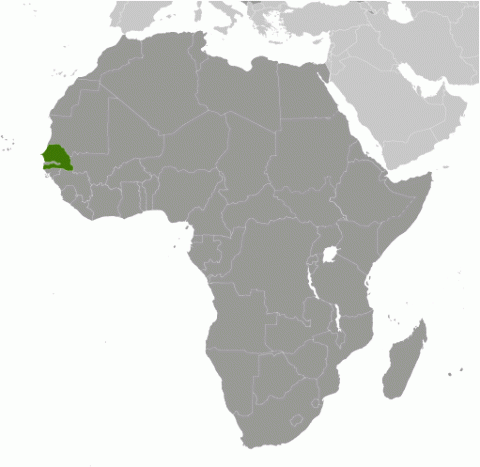

Moderate Advancement
In 2024, Senegal made moderate advancement in efforts to eliminate the worst forms of child labor. The government incorporated 1,127 traditional Koranic schools (daaras) into the national education system and allocated $9.49 million to modernize more than 12,000 daaras, increasing the government’s ability to address forced begging. It also launched the National Framework Plan for the Prevention and Elimination of Child Labor, which aims to eradicate child labor in the country by 2030. In addition, training on the worst forms of child labor was provided to stakeholders encompassing various sectors, including judicial and public prosecution magistrates, police and immigration officers, social workers, community leaders, psychologists, and labor inspectors. However, despite these efforts, Senegalese law does not criminalize the use of a child for prostitution, provide penalties for the use of children in illicit activities, or classify the use of mercury in artisanal gold mining by children under 18 as hazardous work. Additionally, its forced begging provisions do not prohibit children from seeking alms, leaving some 180,000 children who may be subjected to forced begging without recourse.
| Children | Age | Percent and Population |
|---|---|---|
| Working | 5 to 14 | 22.3% (Unavailable) |
| Hazardous Work by Children | 15 to 17 | Unavailable |
| Attending School | 5 to 14 | 53.0% |
| Combining Work and School | 7 to 14 | 13.9% |
| Sector/Industry | Activity |
|---|---|
| Agriculture | Fishing and farming. |
| Industry | Mining gold and quarrying, including work underground, digging, crushing rocks, transporting sand, washing ore, and using toxic chemicals such as mercury and cyanide. Construction, with exposure to dangerous heights and contaminated air.† Processing raw materials into value-added products in manufacturing, in uncomfortable postures and with exposure to solvents.† |
| Services | Welding,† repairing automobiles,† and performing maintenance on pirogues. Driving motorbike taxis.† Domestic work, traditional handiwork, work in bakeries, street vending; recyclables and garbage scavenging, including exposure to toxic fumes.† |
| Categorical Worst Forms of Child Labor‡ | Forced domestic work, begging, and gold mining. Manufacturing and waste processing. Commercial sexual exploitation, sometimes as a result of human trafficking. |
† Determined by national law or regulation as hazardous and, as such, relevant to Article 3(d) of ILO C. 182.
‡ Child labor understood as the worst forms of child labor per se under Article 3(a)–(c) of ILO C. 182.
Children at Higher Risk
Parents facing a lack of economic opportunity often oblige children to help support their families. These children often find themselves confined to the worst forms of work, abandoning education and skills training at an early age. Boys from impoverished rural areas and children from countries neighboring Senegal’s borders are particularly vulnerable to forced begging, whose proceeds enrich corrupt Islamic teachers. An estimated 180,000 boys, known as talibés, are forced to beg for long hours and live in overcrowded, unsanitary conditions at Koranic schools, where they often receive inadequate food and medical care and are vulnerable to physical and sexual abuse, which may be the result of trafficking networks in the region. Girls as young as 12 years old are forced into commercial sexual exploitation camps at gold mining sites—as belief persists in the mining communities that having sex in the mines increases the chances of finding gold—through an increasingly well-organized and growing sex trafficking industry across the regions of Tambacounda and Kédougou. Adolescent girls promised legitimate work are transported to the region with falsified documents from other countries, including a large number from Nigeria, as well as from Niger, Burkina Faso, and Mali. Illegal mines—particularly in remote sites near the Malian border—are also a source of vulnerability to boys. Numerous children from Mali and Burkina Faso are found working in the mines. Children in these isolated circumstances may also be exposed to forced enrollment in neighboring terrorist groups. Finally, many girls as young as 9 years old—known as petites bonnes in French or mbidaan in Wolof—are sent from rural areas to urban households to work. Under the pretext of a traditional cultural practice called confiage, parents send children to live with family or acquaintances to be educated. However, many children are instead subjected to forced domestic labor and commercial sexual exploitation.
Barriers to Education Access
Senegal has a shortage of schools and teachers, especially in rural areas. Students often have to pay for their own books, uniforms, and other school supplies, which discourages attendance. Lack of birth registration, transportation, and accommodations for children with disabilities impedes access to schools. Poor sanitation infrastructure, including a lack of clean running water and bathrooms, is also a barrier to education. Sexual harassment and abuse are widespread in secondary schools in Senegal; teachers sexually exploit girls, soliciting sex in exchange for money, goods, or good grades. One NGO reported that in certain cases, when girls rejected male teachers’ advances, they were penalized with lower grades and excluded from class activities. Research found that school directors were aware of sexual harassment or exploitation, they generally tried to resolve the situation on their own without reporting it to higher authorities or police, and girls were often stigmatized and faulted rather than the teacher. Girls were generally unsure of what constituted consent and harassment and did not know where to report exploitation. If girls became pregnant, they dropped out of school and were often shunned by their families.
| Standard | Age | Meets International Standards | Legislation |
|---|---|---|---|
| Minimum Age for Work | 15 | ✓ | Article 1, Order 3748 on Child Labor; Article L. 145 of the Labor Code; Article 6 of the Decree Establishing the Scale of Penalties for Violations of the Labor Code and Associated Rules for Application |
| Minimum Age for Hazardous Work | 16 | ✓ | Articles 1–3 of the Ministerial Order No. 3749 Determining and Prohibiting the Worst Forms of Child Labor; Article 1 of the Ministerial Order No. 3750 Determining the Types of Hazardous Work Prohibited for Children and Youth; Articles 1–3 of the Ministerial Order No. 3751 Determining the Categories of Business and Work Prohibited to Children and Youth |
| Identification of Hazardous Occupations or Activities Prohibited for Children | ✓ | Order 3748 on Child Labor; Article 2 of the Ministerial Order No. 3749 Determining and Prohibiting the Worst Forms of Child Labor; Ministerial Order No. 3750 Determining the Types of Hazardous Work Prohibited to Children and Youth; Article 2 of the Ministerial Order No. 3751 Determining the Categories of Business and Work Prohibited to Children and Youth | |
| Prohibition of Slavery, Debt Bondage, and Forced Labor | ✓ | Articles L. 4 and L. 279 of the Labor Code; Articles 2 and 4 of the Ministerial Order No. 3749 Determining and Prohibiting the Worst Forms of Child Labor; Articles 1 and 2 of the Law Concerning the Fight Against Trafficking in Persons and Similar Practices and the Protection of Victims | |
| Prohibition of Child Trafficking | ✓ | Articles 1 and 2 of the Law Concerning the Fight Against Trafficking in Persons and Similar Practices and the Protection of Victims | |
| Prohibition of Commercial Sexual Exploitation of Children | ✗ | Article 2 of the Ministerial Order No. 3749 Determining and Prohibiting the Worst Forms of Child Labor; Articles 323 and 324 of the Penal Code; Articles 1 and 2 of the Law Concerning the Fight Against Trafficking in Persons and Similar Practices and the Protection of Victims | |
| Prohibition of Using Children in Illicit Activities | ✗ | Article 2 of the Ministerial Order No. 3749 Determining and Prohibiting the Worst Forms of Child Labor | |
| Minimum Age for Voluntary State Military Recruitment | 18 | ✓ | Article 19 of Law No. 2008-28 |
| Prohibition of Compulsory Recruitment of Children by (State) Military | ✓ | Article 19 of Law No. 70-23 on the Organization of National Defense; Law No. 2008-23 | |
| Prohibition of Military Recruitment by Non-state Armed Groups | ✗ | ||
| Compulsory Education Age | 16 | ✓ | Article 3 of Law No. 2004-37 |
| Free Public Education | ✓ | Article 3 of Law No. 2004-37; Articles 21 and 22 of the Constitution |
Senegalese law does not criminalize use of a child for prostitution. Articles 323 and 324 of the Penal Code criminalize the procuring and offering of a child for prostitution, but not use. Ministerial Order No. 3749, Determining and Prohibiting the Worst Forms of Child Labor, bans the use of children in illicit activities, but neither this law, nor the Penal Code or the Labor Codes define specific criminal penalties for this offense. Section 245 of the Penal Code provides that “the act of seeking alms on days, in places, and under conditions established by religious traditions does not constitute the act of begging," which makes it unclear whether forced begging by Koranic schools is criminally prohibited. Senegal’s law does not prohibit the military recruitment of children by non-state armed groups. Further, because the minimum age for work is lower than the age of completion for compulsory education, children have an incentive to leave school before completing their studies. Order No. 3748 sets the working age at 15 and prohibits hazardous work for children under 18; however, Article 6 allows boys 16 and older to work excessive hours and night hours in hazardous conditions and manage dangerous equipment and processes. Order No. 3750 does not require adequate specific instruction and training to be provided when allowing hazardous work and authorizes persons under 16 years of age to perform certain types of hazardous work, contrary to international agreements. The lists of work forbidden to children do not indicate artisanal gold mining as hazardous work or legally classify mercury and cyanide as toxic elements. Furthermore, the types of hazardous work prohibited for children in Order 3749 do not include domestic work or street work, areas in which there is evidence of potential harm, including sexual abuse, to child workers.
| Organization/Agency | Role & Activities |
|---|
| Ministry of Labor, Social Dialogue, and Institutional Relations (MOL): Identifies and investigates labor code violations, including child labor cases. MOL maintains one inspectorate per administrative region. Inspectors refer criminal cases to the police or gendarmerie. The Coordination Task Force Against Child Labor harmonizes data on child labor among different ministries and agencies. In 2024, the government launched the National Framework Plan for the Prevention and Elimination of Child Labor in Senegal (Plan-Cadre National [PCN], 2024-2028), which aims to eradicate child labor in the country by 2030, coordinating among entities that fight against child labor, including in MOL and the Ministries of Family, Education, Justice, and Health, as well as civil society. MOL raised awareness throughout the country of the legal framework for child labor in Senegal; trained journalists on how to best disseminate information about the plan and the legislation; and recruited influential members of local communities to receive child labor complaints, identify child labor cases, and refer them to the appropriate courts. |
| Ministry of Justice: Enforces and prosecutes criminal laws, including laws related to the worst forms of child labor. Oversees the government’s human trafficking prevention, including its campaign against forced child begging, and houses the National Task Force Against Trafficking in Persons (Cellule Nationale de Lutte contre la Traite des Personnes [CNLTP]). Through its Criminal Affairs and Pardons Branch, the Ministry of Justice collects information and statistics on criminal cases involving forced child labor, child trafficking, and the commercial sexual exploitation of children. |
| Overview of Enforcement Efforts | 2024 |
|---|---|
| Has a Labor Inspectorate | Yes |
| Able to Assess Civil Penalties | Yes |
| Routinely Conducted Worksite Inspections | Yes |
| Unannounced Inspections Permitted | Yes |
| Has a Complaint Mechanism | No |
| Imposed Penalties for Child Labor Violations | Unknown |
| Conducted Criminal Investigations for Worst Forms of Child Labor Crimes | Unknown |
| Imposed Penalties for Worst Forms of Child Labor Crimes | Unknown |
In 2024, 111 labor inspectors conducted an unknown number of worksite inspections, and it is unknown whether child labor violations were found. It is also unknown whether investigations into suspected cases of the worst forms of child labor were conducted, prosecutions were initiated, perpetrators were convicted, or penalties were imposed.
| Coordinating Body | Role & Activities |
|---|
| National Task Force Against Trafficking in Persons (Cellule Nationale de Lutte contre la Traite des Personnes [CNLTP]): Housed within the Ministry of Justice, consists of several ministries and the National Police; does not include MOL. The CNLTP oversees the government’s human trafficking prevention, including its campaign against forced child begging. In 2024, the National Framework Plan for the Prevention and Elimination of Child Labor (Plan-Cadre National) was officially launched for the period of 2024–2028. Four workshops were organized for a wide range of stakeholders in Thies, Saint-Louis, Ziguinchor, and Tambacounda to raise awareness of the new framework. CNLTP also organized a 2-day workshop for journalists to improve their knowledge base of concepts relating to child labor, as well as the institutional, legislative, regulatory, and policy framework to combat child labor. CNLTP organized events in commemoration of World Day Against Child Labor to inform, raise awareness, and mobilize the population to prevent the worst forms of child labor. |
| Policy | Description & Activities |
|---|
| Vision Sénégal 2050:* The new administration announced a holistic development strategy in September 2024 called “Vision Sénégal 2050” that includes “Quality Human Capital and Social Equity” as a strategic pillar. One focus under this pillar is strengthening measures to combat begging and improve the regulation of daaras. |
| National Framework Plan for the Prevention and Elimination of Child Labor in Senegal (Plan-Cadre National, 2024–2028):* Aims to eradicate child labor in the country by 2030, coordinating among entities that fight against child labor, including MOL and the Ministries of Family, Education, Justice, and Health, as well as civil society. |
* Policy was approved during the reporting period.
| Program | Description & Activities |
|---|
| Removal and Socioeconomic Reintegration Program for Children in Street Situations (2021–2024):‡ A 3-year, $47 million program for the removal and socio-economic reintegration of children in street situations. Aimed to identify and remove children from forced begging, return children to their families of origin, and provide them with shelter in a government-sponsored welcome center or approved Koranic school or place children with foster families. However, sometimes children who were returned to their families continued to be subjected to forced begging. During the reporting period, 150 children were rescued from the street and transferred to the Ginddi Center for care. |
| Centers and Shelters:‡ Include the Ginddi Center, with a budget of $440,000 for victim services to support abused and vulnerable children, including runaway talibés (students of Koranic schools), street children, and child trafficking survivors. Services provided to children include meals, shelter, basic medical care, psycho-social services, clothing, and vocational training. However, the center continued to lack sufficient space, limiting the number of victims authorities could assist. As a result, the government sometimes sent victims to NGOs or partner daaras (Koranic schools), at which children received follow-on support services until family reunification. The Ministry of Justice also managed transit houses in Dakar, Pikine, and Saint-Louis to provide education, rehabilitation, and reintegration services to survivors of child trafficking. In 2024, an international seminar on the protection of children in difficult situations was organized in Tangier, bringing together experts from Morocco, Andalusia, and Senegal to exchange best practices and solutions adapted to the care of vulnerable children. In addition, these countries initiated a project to rehabilitate the Ginddi Center. |
| Programs to Counter Sex Trafficking in Kédougou, Senegal (2022–2024): Implemented by the African Programming and Research Initiative to End Slavery in partnership with the NGOs Free the Slaves and La Lumière Shelter, and the UN Office on Drugs and Crime. Funded by the U.S. Department of State to address sex trafficking of girls and women in the gold-producing region of Kédougou by conducting prevalence research and enhancing capacity for prevention, prosecution, and protection. Although the program ended in September 2024, La Lumière Shelter continued to operate. |
‡ Program is funded by the Government of Senegal.
† The government had other social programs that may have included the goal of eliminating child labor.
| Area | Suggested Action |
|---|---|
| Legal Framework | Ensure that the law criminally prohibits the recruitment of children under age 18 by non-state armed groups. |
| Criminalize the use of a child for prostitution. | |
| Establish criminal penalties for the use of children in illicit activities. | |
| Clarify forced begging provisions in the Penal Code and the Law Concerning the Fight Against Trafficking in Persons and Similar Practices and the Protection of Victims to explicitly prohibit all forced begging, including alms-seeking, under any circumstances. | |
| Ensure that the hazardous occupations and activities prohibited for children are comprehensive and include sectors in which child labor is known to occur, such as work in underground mines and the use of mercury and cyanide in gold mining, and in which there are risks of sexual exploitation, including street work and domestic work. | |
| Ensure that children under 16 years of age are not engaged in any form of hazardous work, without exception, including in work in underground mines and quarries. Establish by law full guarantee of the conditions provided under Article 3(3) of the ILO Convention 138, ensuring that young persons between 16 and 18 years of age engaged in hazardous work receive adequate specific instructions and training in the particular types of hazardous work and that the health, safety, and morals of the child are protected. | |
| Raise the minimum age for work from age 15 to age 16 to align with the age of completion for compulsory education. | |
| Enforcement | Increase the number of labor inspectors from 111 to 128 to ensure adequate coverage of the labor force of approximately 5.1 million people. |
| Ensure that labor inspections are carried out in the informal sector, including in private homes and on farms, and publish information on labor law enforcement. | |
| Ensure that courts have sufficient resources to prosecute cases related to the worst forms of child labor, provide training to criminal investigators, and ensure that criminal cases involving child victims are referred to the Ministry of the Interior and Public Security’s Children’s Unit. | |
| Publish criminal law enforcement information on the worst forms of child labor, including the number of investigations, violations, and prosecutions, and whether penalties were imposed. | |
| Criminally prosecute secondary school teachers who sexually exploit girls, provide training for girls and their families so they know where to safely report exploitation, and establish social safety nets to enable girls who become pregnant to finish school. | |
| Investigate, prosecute, and, when appropriate, convict Koranic school teachers complicit in facilitating the worst forms of child labor, such as forced begging. | |
| Allocate resources for the removal, rehabilitation, restitution, and reintegration of survivors of the worst forms of child labor. | |
| Establish a formal complaint mechanism to receive child labor complaints, and track cases of child labor for referral to law enforcement or social services providers. | |
| Ensure the Ministry of Labor, Social Dialogue, and Institutional Relations’ participation in the National Task Force Against Trafficking in Persons. | |
| Social Programs | Improve access to education by increasing the number of schools and teachers, especially in rural areas, increasing access to transportation, improving school infrastructure and sanitation, ensuring access to schools for students with disabilities, reducing school-related fees for supplies, providing all children with birth certificates, and protecting children in schools from sexual harassment and abuse. |
| Collect and publish data on the extent and nature of children’s activities in the labor force. Establish policies and programs that address all forms of child labor, including domestic work, agriculture, mining, and commercial sexual exploitation of children. | |
| Raise awareness of worst forms of child labor and ensure that services are adequate to provide protective care to survivors of the worst forms of child labor. |