Header Photo Credit: Wonderlane_Unsplash
Key Points
- Workers in a company’s supply chain are the most critical stakeholder to engage. They are best positioned to report on violations of their workplace rights and to identify effective remedies.
- As representatives of workers, trade unions and democratic worker organizations provide support for workers to identify and raise concerns and collectively advocate for their rights and interests. Even when workers do not have a union in a workplace, democratic independent unions may exist in the sector or geographic area and can serve as important interlocutors in due diligence processes.
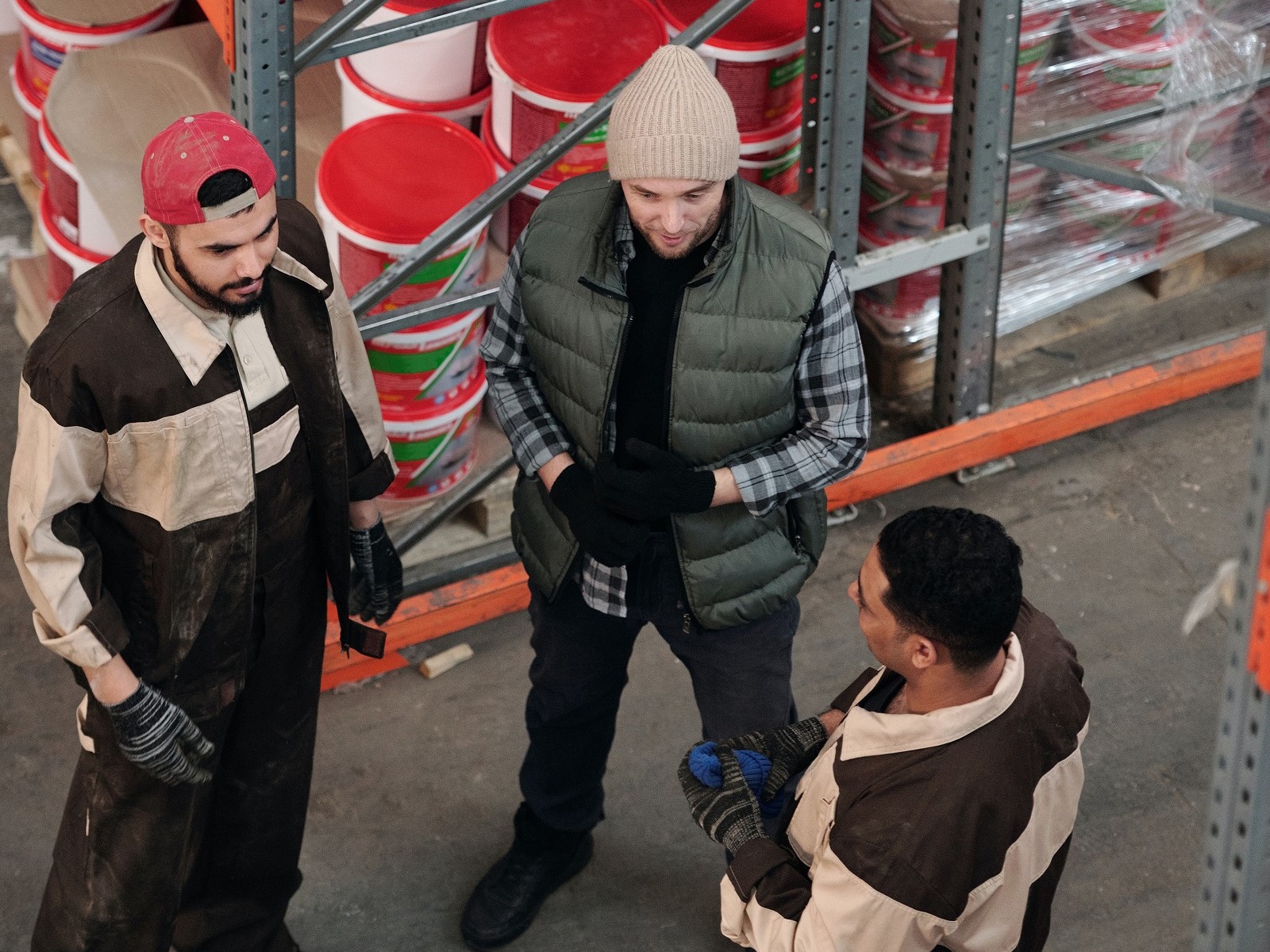
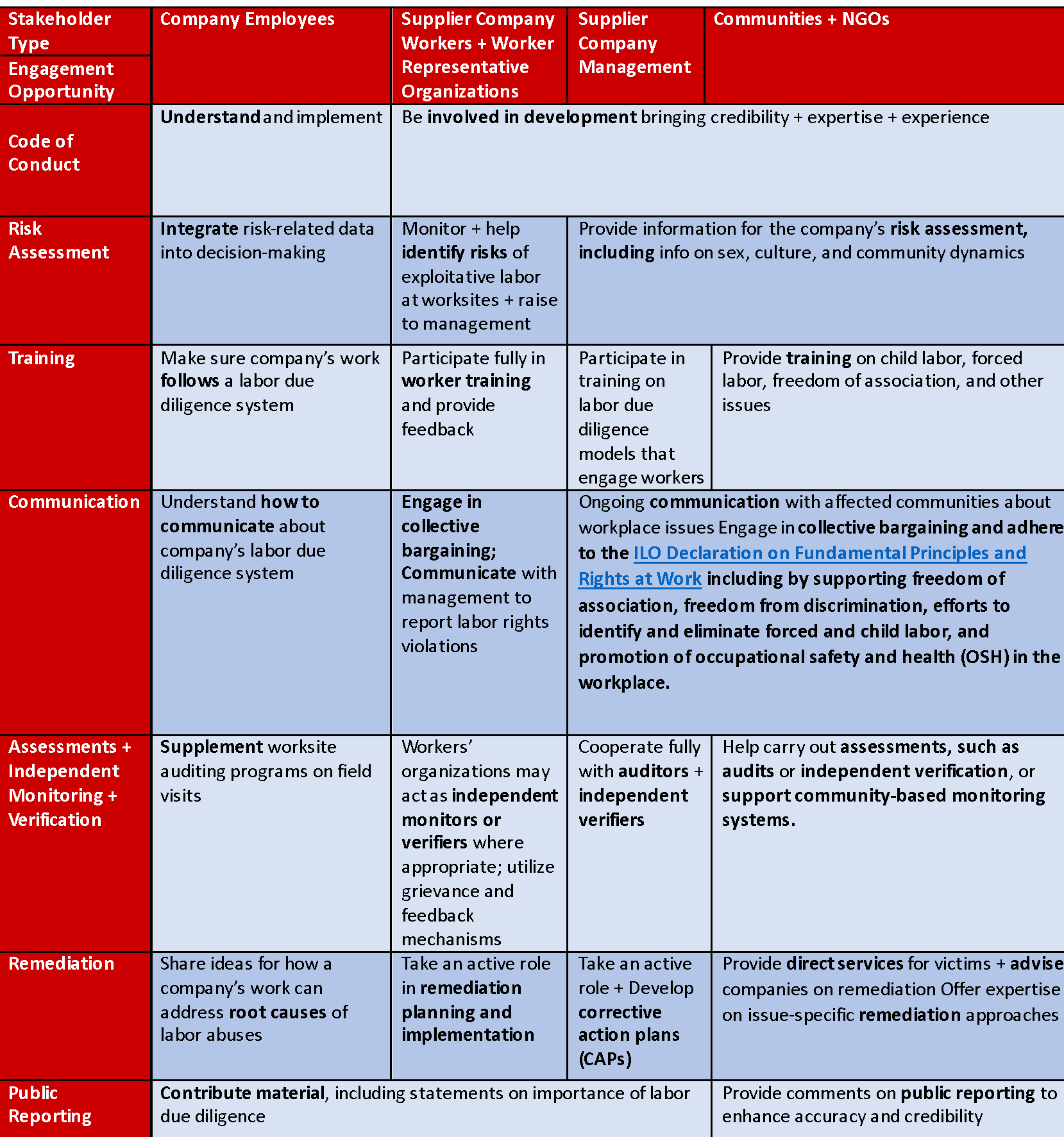
- Engaging all stakeholders (including company employees and managers, and trade unions and/or worker representative organizations, supplier managers and workers, community organizations and NGOs,) can help large corporations and SMEs understand the consequences of certain decisions and actions on specific stakeholders, the varied and changing expectations of stakeholders, and the key issues that surface in supply chains. Identifying other organizations workers trust is of critical importance where no active, democratic trade union exists or when groups of workers are legally barred from joining or participating in unions.
- Stakeholder engagement promotes buy-in, because those who participate in the development of a system are more invested in its success.
- Companies can take a proactive approach to engaging with government entities to enhance labor due diligence practices and build labor due diligence systems.
- Engaging stakeholders internally is as important as engaging external stakeholders. Accountability for senior managers at all levels of an organization is critical to establishing lasting systems to manage risks of labor abuses.
Key Topics
Examples in Action

Industry-led platforms, industry associations, and industry-specific initiatives like the Responsible Sourcing Network can provide a way to identify and engage stakeholders and partners via coalition building.
The ILO’s Child Labor Platform (CLP) is a business-led forum that aims to tackle child labor in supply chains.
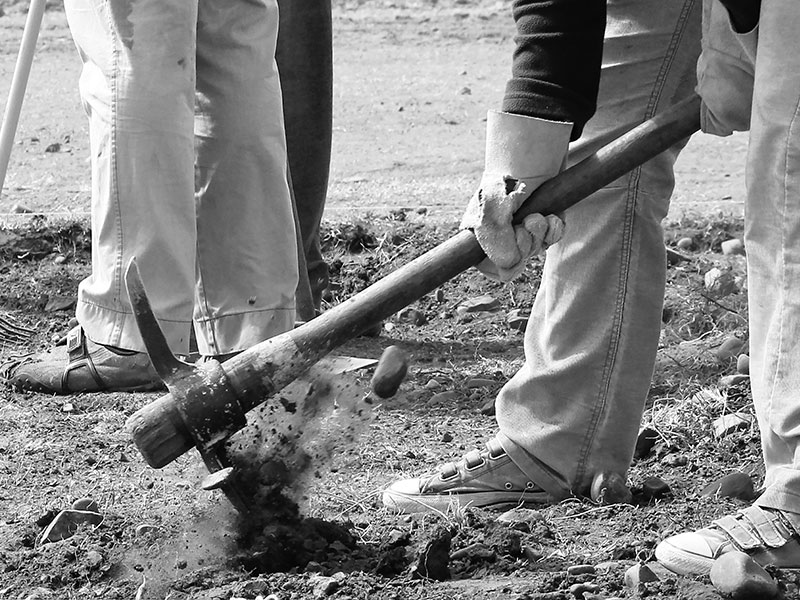
Launched in June 2018, the International Labor Organization’s (ILO) Global Business Network on Forced Labor (GBNFL) brings together the ILO with businesses of all sizes and sectors and their networks from around the globe to eradicate forced labor.

The Government of Brazil publishes a Register of Employers (Cadastro de Empregadores), also known as the “Dirty List” (Lista Suja), who have been found by government inspectors to be subjecting workers to “conditions analogous to slavery.”
Further Resources
- ILO, IOE. Child Labour Guidance Tool for Business 2015. http://www.ilo.org/ipecinfo/product/download.do?type=document&id=27555.
- ILO, IOE. Combating forced labour: A Handbook for Employers and Business 2025. Combating forced labour - A handbook for employers and business | International Labour Organization