Photo Credit: Dinodia Photos RM_Alamy
Fundamental Principles and Rights at Work are Essential to Codes of Conduct
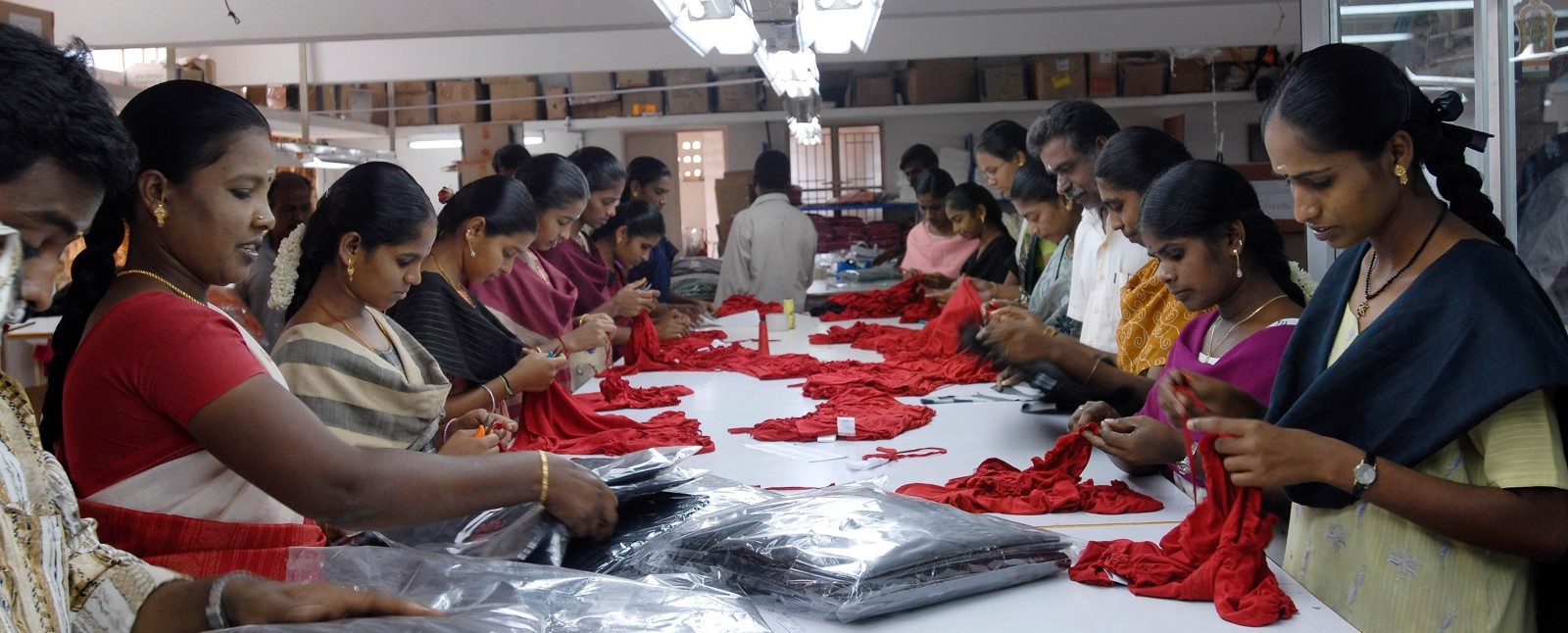
Freedom of association, or the right of workers to form and join organizations of their choosing, is a fundamental right underpinning democratic workplace governance. Collective bargaining is an essential element of freedom of association that helps ensure that workers and employers have a say in negotiations over wages and working conditions. In cases where freedom of association and collective bargaining are restricted among U.S. trade partners, this can lead to the suppression of wages, poor working conditions, and other unfair trade practices that harm American workers and businesses. The ability of workers to collectively organize and articulate their demands is a founding principle of labor relations, enshrined in numerous international agreements and standards. Through the International Labor Organization (ILO), a tripartite UN agency that brings together representatives of governments, workers, and employers to promote labor rights, the international community has affirmed the importance of freedom of association and collective bargaining in its key standards and conventions, including in the Fundamental Principles and Rights at Work, Convention No. 87, and Convention No. 98. For more on the ILO and key ILO conventions, see below.
Relevant ILO Conventions
The International Labor Organization (ILO) is a UN specialized agency that brings together representatives of governments, trade unions, and employers’ associations to promote internationally recognized labor rights by setting and supervising the application of conventions and recommendations, as well as promoting decent work and providing technical support to governments, trade unions, and employers. They are considered the minimum enabling rights people need to defend and improve their rights and conditions at work:
Freedom of Association and Protection of the Right to Organize Convention, 1948 (No. 87).
Right to Organize and Collective Bargaining Convention, 1949 (No. 98). This is supplemented by Recommendation 163.
Forced Labor Convention, 1930 (No. 29). This is supplemented by Recommendation 35.
Protocol of 2014 to the Forced Labor Convention, 1930. This is supplemented by Recommendation 203.
Minimum Age Convention, 1973 (No. 138). This is supplemented by several Recommendations, including Recommendation 146.
Worst Forms of Child Labor Convention, 1999 (No. 182). This is supplemented by Recommendation 190.
Equal Remuneration Convention, 1951 (No. 100). This is supplemented by Recommendation 90.
Discrimination (Employment and Occupation) Convention, 1958 (No. 111). This is supplemented by Recommendation 111.
Promotional Framework for Occupational Safety and Health, 2006 (No. 187).
The ILO has a Helpdesk for Business on International Labor Standards, a free and confidential service providing expert technical advice to users on international labor standards and the Tripartite Declaration of Principles Concerning Multinational Enterprises and Social Policy.
Making Codes of Conduct More Effective
As a baseline, codes of conduct and labor due diligence tools should include internationally recognized standards on child labor, including hazardous work for children, forced labor, freedom of association (FOA) and collective bargaining (CB), occupational safety and health (OSH) and discrimination set forth in the ILO Declaration on Fundamental Principles and Rights at Work. They should also include standards on decent working conditions, including working time and appropriate payment of wages, as set forth in relevant ILO conventions. They should also account for national labor laws or protections specific to short- or fixed-term employment.
To be effective for purposes of preventing, identifying, mitigating, and, if needed, remediating labor rights violations, contracts should operate on a shared-responsibility model, rather than a risk-shifting model that places the entire responsibility for upholding labor rights standards on the supplier-party. In some cases, companies choose to sign agreements made with suppliers and worker organizations that bind all parties to agreed-upon standards and processes for remediating violations.
Effective contracts can be achieved by integrating the following principles of responsible, due diligence-aligned contracting:
Responsible allocation of risks and obligations: Include a joint commitment to cooperate in carrying out ongoing, risk-based labor rights due diligence to support adherence to the code of conduct (rather than one-sided, supplier-only, promises of perfect compliance with the code).
Responsible purchasing practices: Include a commitment by the buyer-party to engage in responsible sourcing and purchasing practices that create positive incentives across the supply chain to prevent violations.
Remediation first and responsible exit: Include a shared commitment to prioritize worker- centered remediation if a labor rights violation occurs (rather than immediately resort to traditional contract remedies like order cancellations, suspension of payment, or contract termination). If one of the parties wants to disengage or exit the contract, they should do so responsibly, taking measures to mitigate the adverse labor rights impacts created by the exit. Note that some companies may choose to have a joint code of conduct that commits both companies to work together to uphold labor standards.
 Step 3: Develop a Code of Conduct