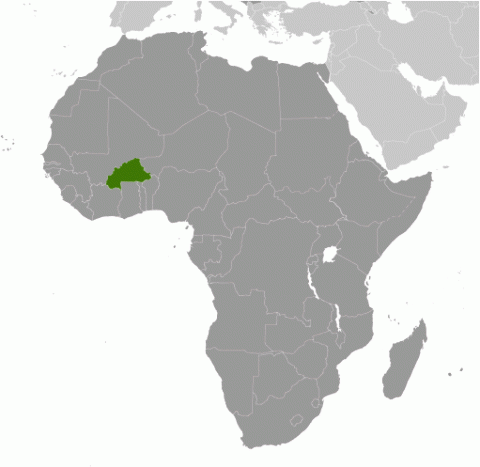
Goods & Exploitation Type
/agencies/ilab/resources/reports/child-labor/burkina-faso
There are reports of children ages 10-17 producing cotton under conditions of forced labor in Burkina Faso. According to an NGO report containing the most recently available data on the eastern region of the country, it is estimated that as many as 50 percent of all boys aged 10 and above migrate or are trafficked to work for a year; most work on cotton farms in Tapoa or Kompienga. Children are also trafficked from around the country to work on cotton farms in Houet and Tuy provinces. Some children are forced to sow, weed, and harvest the cotton in hazardous conditions; some work under threats of abuse or withholding of payment. They usually live with their employer, and do not receive sufficient food. These children are lured by recruiters or traffickers with false promises of payment or gifts such as a bicycle. The children work on 12 or 17 month contracts and are prohibited from leaving to return home until the end of the contract. They are paid only when the cotton is sold and they have completed their contract, but most report that they do not receive their full payment, and some receive no payment at all.
PDF Attachment
EO_Burkina_Faso_2014.pdf
(185.49 KB)
PDF Label
French Translation
/agencies/ilab/resources/reports/child-labor/burkina-faso
There are reports that children are forced to mine gold in the Sahel region of Burkina Faso. According to a report by the ILO containing the most recently available data, in the combined Sahel regions of Burkina Faso and Niger, up to 30-50 percent of the gold mine workforce is comprised of children; most are under the age of 15, and some work under conditions of forced labor. Some children from around the country are trafficked to mines in the country's Ioba, Oudalan, Passore, and Sissili provinces. These children work in small informal mines that are located in remote rural areas and mostly operate on a seasonal basis. The children, beginning between ages 12 and 14, are forced to work in hazardous conditions digging, breaking rocks, transporting, washing, and pounding the gold, including work underground in narrow shafts. These children receive little or no payment, with many receiving wage deductions for lodging and food expenses.
PDF Attachment
EO_Burkina_Faso_2014.pdf
(185.49 KB)
PDF Label
French Translation
/agencies/ilab/resources/reports/child-labor/burkina-faso
There are reports that children ages 5 to 17 work in granite quarries in Burkina Faso. These children are primarily found in granite quarries located in Pissy and Yagma, on the outskirts of the capital, Ouagadougou. According to Government of Burkina Faso officials, NGOs, and the U.S. Department of State, numerous incidents of child labor have been reported in these granite quarries, including hundreds of children working in the Pissy quarry, and NGOs report that the problem is increasing. Children work for long hours breaking large rocks by hand and carrying heavy loads of dirt, rock, and gravel. Children in granite quarries are at high risk of physical injury, and are exposed to large quantities of dust and smoke, which can cause respiratory diseases. Some children also experience physical abuse in the quarries.
PDF Attachment
TVPRABurkinaFasoGranite.pdf
(144.39 KB)
PDF Label
French Translation